What Are The Divorce Restrictions in Early America
📅 2026 Update: Changes in Divorce Trends and Procedures
Since the original article was written, several important changes have occurred in divorce laws and trends in the U.S. These updates reflect how divorce rates, processes, and costs have evolved in recent years. Readers can find the earlier article further down the page for historical context.
📉 Divorce Rates Today
The divorce rate in the U.S. was 2.5 per 1,000 people in 2024. This marks a continued decline from earlier decades. In contrast, divorce rates have been decreasing since the early 1980s, showing fewer divorces among married women aged 15 and older.
- 📊 State Variations: Divorce rates differ by state. Nevada had the highest rate at 3.8 per 1,000 people, while Louisiana had the lowest at 0.8 per 1,000 people.
💰 Current Fees and Costs
Filing for divorce comes with various costs that can vary by state and county. In California, the filing fee for a divorce is around $435, while in Texas, it is approximately $300.
- 📜 Attorney Fees: Divorce attorneys charge hourly rates ranging from $150 to $500, depending on their experience and location.
- 🕊️ Mediation Costs: Mediation services usually cost between $100 and $300 per hour, with total expenses depending on case complexity.
⏱️ Processing Times
The time it takes to finalize a divorce can differ widely based on whether the divorce is contested or uncontested. An uncontested divorce typically finishes within 2 to 6 months. In contrast, contested divorces may take several months to years, depending on various factors.
🏠 Child Custody and Support
Child custody decisions focus on the best interests of the child. Courts consider factors like the child's relationship with each parent. Both parents generally must contribute to child support, with amounts based on state guidelines.
📌 Key Points to Remember
- 📊 Divorce rates have declined to 2.5 per 1,000 people as of 2024.
- 💰 Filing fees vary; California is about $435, Texas is around $300.
- ⏱️ Uncontested divorces can be finalized in 2 to 6 months.
- 🏠 Child custody focuses on the child's best interests.
- 🤝 Mediation costs range from $100 to $300 per hour.
💡 Tips for Navigating Divorce Processes
Consulting an attorney can help clarify your unique situation regarding divorce laws and processes.
📝 Know Your Filing Fees
Research the filing fees in your state or county ahead of time. These fees can significantly affect your budget and overall planning for the divorce process.
📅 Understand Residency Requirements
Most states require one spouse to be a resident for 6 months to 1 year before filing for divorce. Knowing these requirements can prevent delays in starting the process.
💬 Explore Mediation Options
Consider mediation as an alternative to litigation for resolving disputes. Mediation can often be more cost-effective and less adversarial, promoting a smoother resolution.
⏳ Be Aware of Response Deadlines
Once served with a divorce petition, the receiving spouse typically has 20 to 30 days to respond. Missing this deadline can lead to complications in the divorce process.
📄 Utilize Free Resources
Look for legal aid and nonprofit organizations that offer free or low-cost assistance. These resources can help navigate the divorce process without breaking the bank.
🏆 Divorce Services Ranked by User Reviews (2026)
This section covers various divorce-related services that can assist individuals navigating the divorce process. The rankings are based on Trustpilot data from October 2026. Ratings change over time, and while star ratings are helpful, they should be considered alongside the experiences of different users.
🥇 1. DivorceWriter
DivorceWriter has been rated 4.3 by 1,218 reviewers. It is known for providing state-specific divorce documents and a user-friendly online format. However, it may not be suitable for contested or complex divorces, as users are responsible for filing and notarization.
🆓 Free Legal Aid Resources
Organizations like Legal Aid offer free or low-cost legal assistance to eligible individuals. Some courts also provide free mediation services to help resolve disputes without going to trial.
🔎 Considerations When Choosing Divorce Services
- 🏷️ Compare filing fees based on your state.
- 📄 Check the availability of mediation options.
- 💼 Review attorney fees and experience.
- 📞 Look into customer service and support options.
- 🏛️ Understand the types of documents needed for your case.
❓ Frequently Asked Questions
🔍 What are the grounds for divorce in the U.S.?
All states now recognize no-fault divorce, allowing couples to dissolve their marriage without proving wrongdoing. Some states still permit fault-based divorces for reasons like adultery or cruelty.
📅 How long does it take to finalize a contested divorce?
A contested divorce can take several months to years to finalize, depending on the complexity of the case and court availability. Uncontested divorces are usually quicker.
🏠 How is child custody determined?
Courts determine child custody based on the best interests of the child. Factors considered include the child's relationship with each parent and their adjustment to home and school.
💸 What factors are considered for alimony?
Alimony, or spousal support, may be awarded based on the length of the marriage, the recipient's financial needs, and the payer's ability to pay.
📜 Are there resources for low-cost legal help?
Yes, organizations like Legal Aid provide free or low-cost legal assistance to eligible individuals. Some courts also offer free mediation services.
⏳ What are the deadlines for filing and responding to divorce petitions?
The filing spouse must submit the divorce petition within their state's residency requirement. The served spouse typically has 20 to 30 days to file a response.
⚖️ Recent Court Rulings in Divorce Cases
Recent court rulings have continued to shape divorce laws and procedures across the U.S. These decisions impact various aspects of divorce, including property division, alimony, and child custody.
- Idaho Supreme Court Upholds Custody Ruling in Devai CaseIdaho Supreme Court · July 15, 2026
- Connecticut Supreme Court rules on child custody placementSupreme Court of Connecticut · June 17, 2026
- Florida Supreme Court rules on marital property interestSupreme Court of Florida · July 9, 2026
- Texas Court Denies Mandamus Petition in Divorce CaseTexas Court of Appeals, 1st District (Houston) · August 6, 2026
For more detailed information on recent rulings, you can browse more rulings on the news page.
End of October 2026 Update
In Colonial America, couples that attempted filing for divorce often faced a difficult road due to divorce restrictions.
However, the American Revolution brought great changes for couples that wished to legally dissolve their marriages.
By the early nineteenth century, divorces were granted in almost every state. However, divorce restrictions were still governed on a state by state basis.
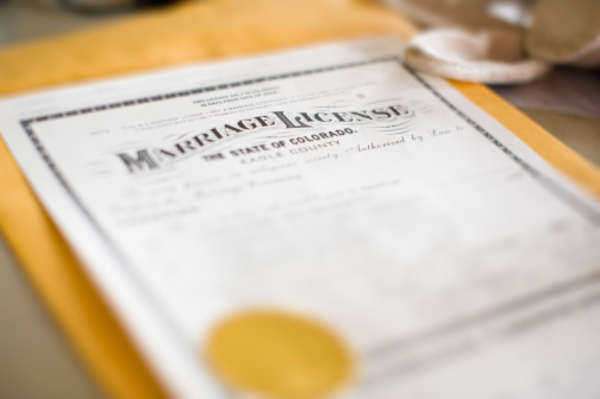
Divorce restrictions in many states, were eased in a sudden fashion unknowable by many historians.
In Colonial America, filing for divorce was a very uncommon practice.
In fact, even those that took part in filing for divorce often found that they would still be legally married after the attempt.
Spouses had to prove that there was some cruelty involved in the marriage in order to have a divorce even considered.
After the American Revolution, couples were able to get divorced if adultery could be proven as fact.
Yet, each state still had its own divorce restrictions in place. For example, some states required that there was proof of adultery, cruelty, abuse, or abandonment for a certain length of time.
Generally, only the innocent party would be legally freed from the marriage contract and the guilty party would continue to be unable to get remarried.
In fact, the guilty party would only be allowed to remarry upon the death of the innocent party.
In some states, the courts ruled on divorce cases and in others, the state legislature had to make decisions that pertained to each couples filing for divorce.
In the end of the nineteenth century, couples found that divorces were granted on a much broader scale.
In fact, filing for divorce became much easier as divorce restrictions were eased across the United States.
Divorce restrictions began to be seen as much more liberal and they were significantly less restrictive than they had been in the past.
However, the number of divorces remained fairly low, especially when compared to recent divorce statistics.
However, couples were now allowed to divorce for a variety of reasons and the amount of proof required for divorce was very minimal.
In order to prove grounds for divorce, couples need only attest to the fact that their spouse had broken the marriage contract.
In fact, historians are still unable to explain the drastic and quick easement on divorce restrictions.
Filing for divorce had become much simpler, basically overnight. There are many theories as to why these changes took place, but no one is certain.
Filing for divorce has become simpler throughout history. Couples are now able to take part in no-fault divorces.
In the past, couples had to prove that there were grounds for divorce, which included adultery, abuse, or abandonment.
However, couples wishing to divorce now need only show that they have irreconcilable differences and can no longer live together happily.
In the past, spouses generally had to prove that their partner was guilty of misconduct that was so severe, that they could no longer remain married to them; as society's general opinion of marriage changes, their opinion of divorce does, as well.